Depression isn't just about feeling sad. It rewires how you interpret the world, convincing you that negative outcomes are inevitable and that your situation is permanent. These thought patterns don't just reflect depression; they actively fuel it. CBT matters because it directly challenges this cycle. Instead of simply talking about your feelings or waiting for medication to lift your mood, you learn specific skills to interrupt the patterns that keep depression alive.
CBT produces measurable, lasting results
Research consistently shows that cognitive behavioral therapy for depression achieves results comparable to antidepressant medication, often with longer-lasting effects. Studies published in major medical journals demonstrate that patients who complete CBT maintain their improvements months and even years after treatment ends. This happens because you're not depending on an external intervention to feel better. You've internalized the tools and can apply them independently when difficult thoughts resurface.
"CBT teaches you to become your own therapist, recognizing and correcting distorted thinking before it spirals into a depressive episode."
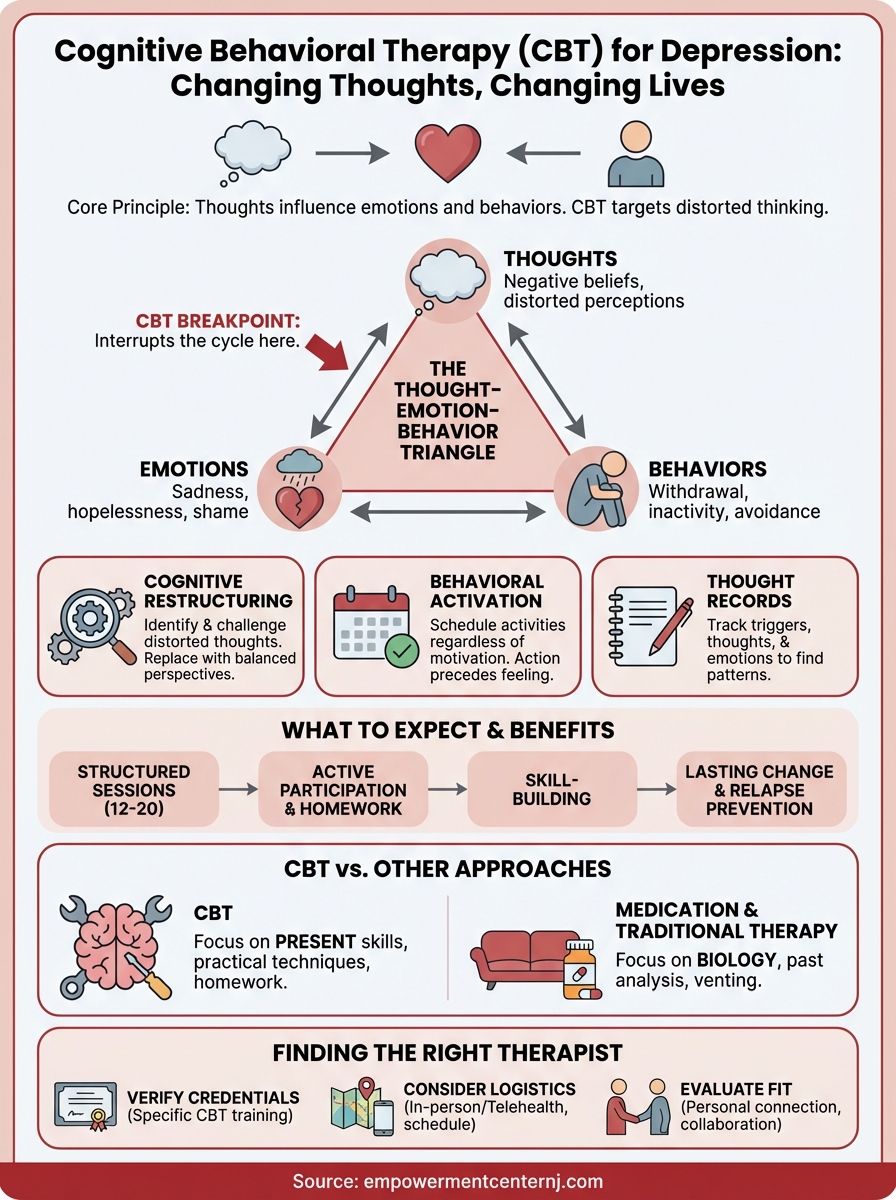
Traditional talk therapy can provide relief through venting and exploring your past, but it doesn't always equip you with concrete strategies for the present. CBT operates differently. Each session focuses on practical techniques you can use immediately, from identifying cognitive distortions to testing assumptions that keep you stuck. You walk away with homework assignments designed to strengthen these skills in real-world situations.
It addresses thinking patterns, not just symptoms
Depression symptoms vary from person to person. You might experience crushing fatigue, constant worry, physical pain, or complete emotional numbness. However, underneath these diverse symptoms lies a common thread of distorted thinking. CBT matters because it targets this underlying problem rather than chasing individual symptoms. When you learn to recognize thoughts like "I always fail" or "Nothing will ever improve," you gain the ability to interrupt the cascade of emotions and behaviors those thoughts trigger.
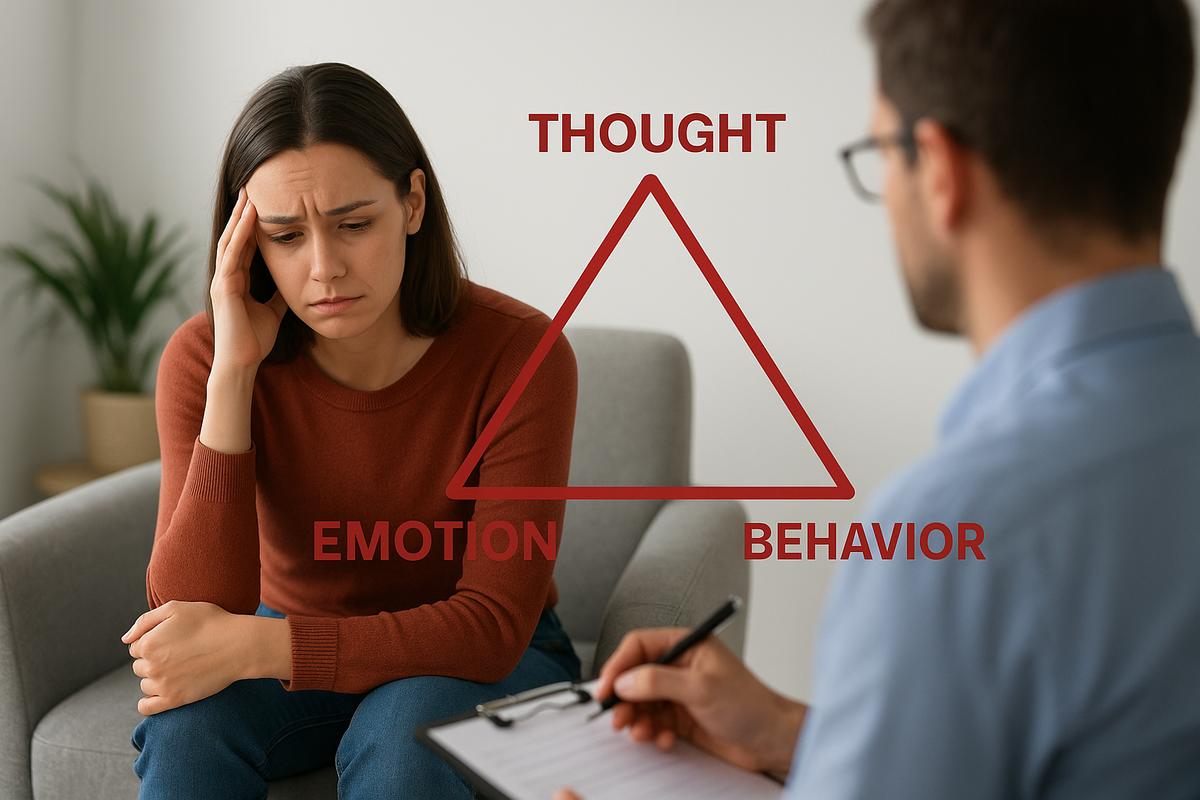
Many people assume depression is purely biological, something happening to them beyond their control. While brain chemistry plays a role, the relationship between thoughts, emotions, and behaviors creates a feedback loop. Your thoughts influence your mood, your mood affects your behavior, and your behavior reinforces your thoughts. CBT breaks this cycle by giving you leverage over the one element you can control: your thinking patterns.
You develop skills that extend beyond depression
The techniques you learn in CBT don't just apply to depression. Once you understand how to identify cognitive distortions and restructure your thinking, those skills transfer to other areas of your life. Anxiety, relationship conflicts, work stress, and major life transitions all benefit from the same foundational approach. This versatility makes CBT particularly valuable. You're not learning a narrow technique for one specific problem; you're developing a framework for managing your mental health across situations.
At the Empowerment Center, we've seen clients use CBT skills to navigate divorce, career changes, and family conflicts long after their depression symptoms resolved. The problem-solving abilities and self-awareness you build become permanent tools in your mental health toolkit.
CBT works within realistic timeframes
Unlike therapies that can continue indefinitely without clear goals, CBT typically runs for 12 to 20 sessions with specific outcomes in mind. Each session builds on the previous one, creating measurable progress. You track your mood, identify patterns, and adjust your approach based on what's working. This structured format matters for two reasons: it respects your time, and it provides clear evidence that treatment is effective. You're not left wondering whether therapy is helping. The data shows you exactly where you started and how far you've come.