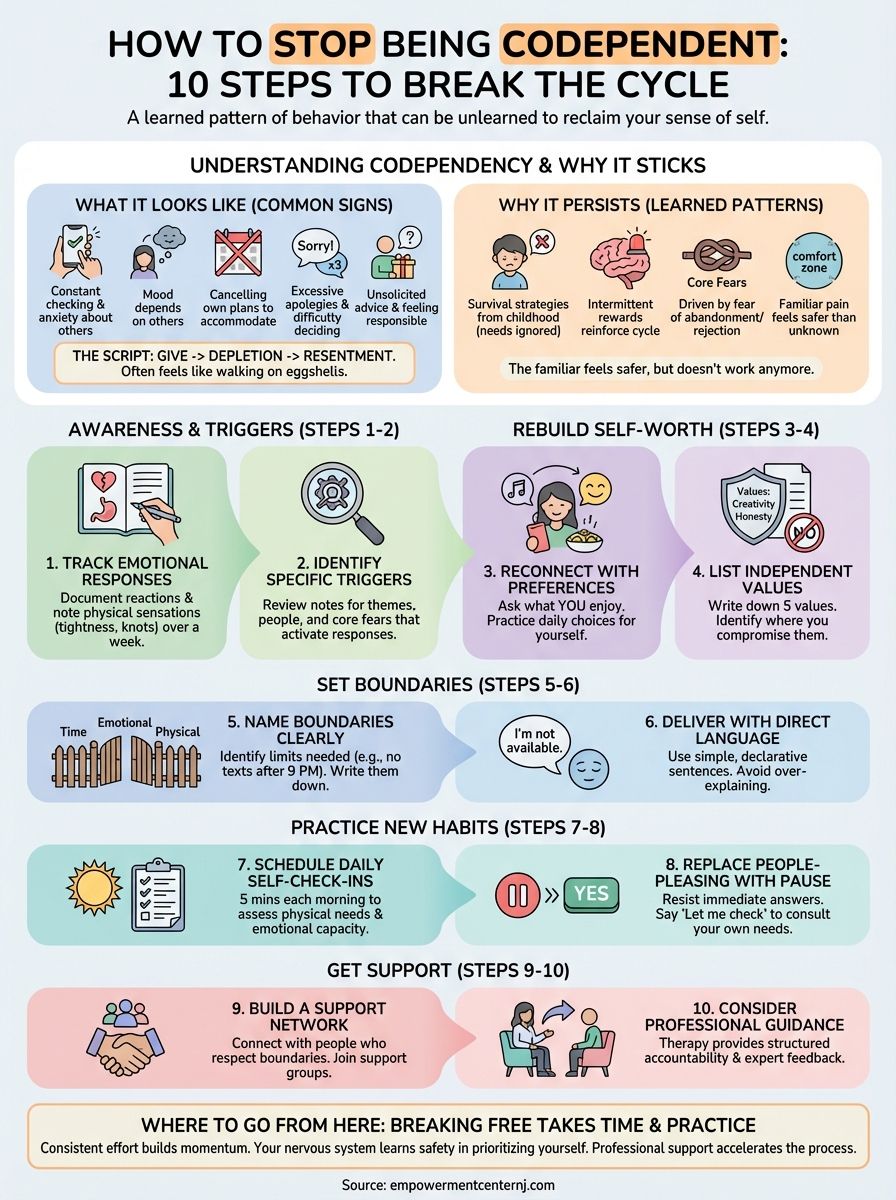
Codependency shows up differently for everyone, but certain behaviors signal a pattern. You might find yourself constantly checking your phone to see if someone replied, or feeling anxious when you don't know how another person is doing. Your mood depends entirely on someone else's state of mind. You cancel your own plans to accommodate others, even when they didn't ask you to. You apologize excessively, take blame for things that aren't your fault, and struggle to make decisions without input from specific people in your life.
Common signs of codependent behavior
Your relationships likely follow a familiar script. You offer unsolicited advice or help because you feel uncomfortable when others struggle, even if they haven't asked for support. When someone you care about makes a poor choice, you feel personally responsible for fixing the outcome. You avoid conflict at all costs, agreeing to things you don't want to do because saying no feels impossible.
"The need to be needed becomes more important than your own needs."
Physical and emotional exhaustion become your baseline. You give until you're depleted, then wonder why resentment builds up even though you chose to help. Many people describe feeling like they're walking on eggshells, constantly monitoring another person's reactions and adjusting their behavior accordingly. This hypervigilance drains your energy and keeps you disconnected from your own feelings and preferences.
Why these patterns persist
Codependent behaviors typically develop as survival strategies. If you grew up in an environment where your needs were ignored or dismissed, you learned that taking care of others was the only way to feel valued. Children who had to manage a parent's emotions or compensate for family dysfunction often carry these patterns into adult relationships without realizing it.
Your brain reinforces codependency through intermittent rewards. When you successfully manage someone else's mood or "save" them from a problem, you get a temporary sense of purpose and relief. This creates a cycle that's hard to break because the behavior occasionally gets rewarded, even though it ultimately causes harm. The familiar feels safer than the unknown, even when the familiar is painful.
Learning how to stop being codependent requires recognizing that these patterns served a purpose at one point but no longer work for you. Your nervous system learned to prioritize other people's stability over your own. Breaking free means retraining yourself to notice your own needs, tolerate discomfort when you don't intervene, and accept that other people's problems aren't yours to solve.