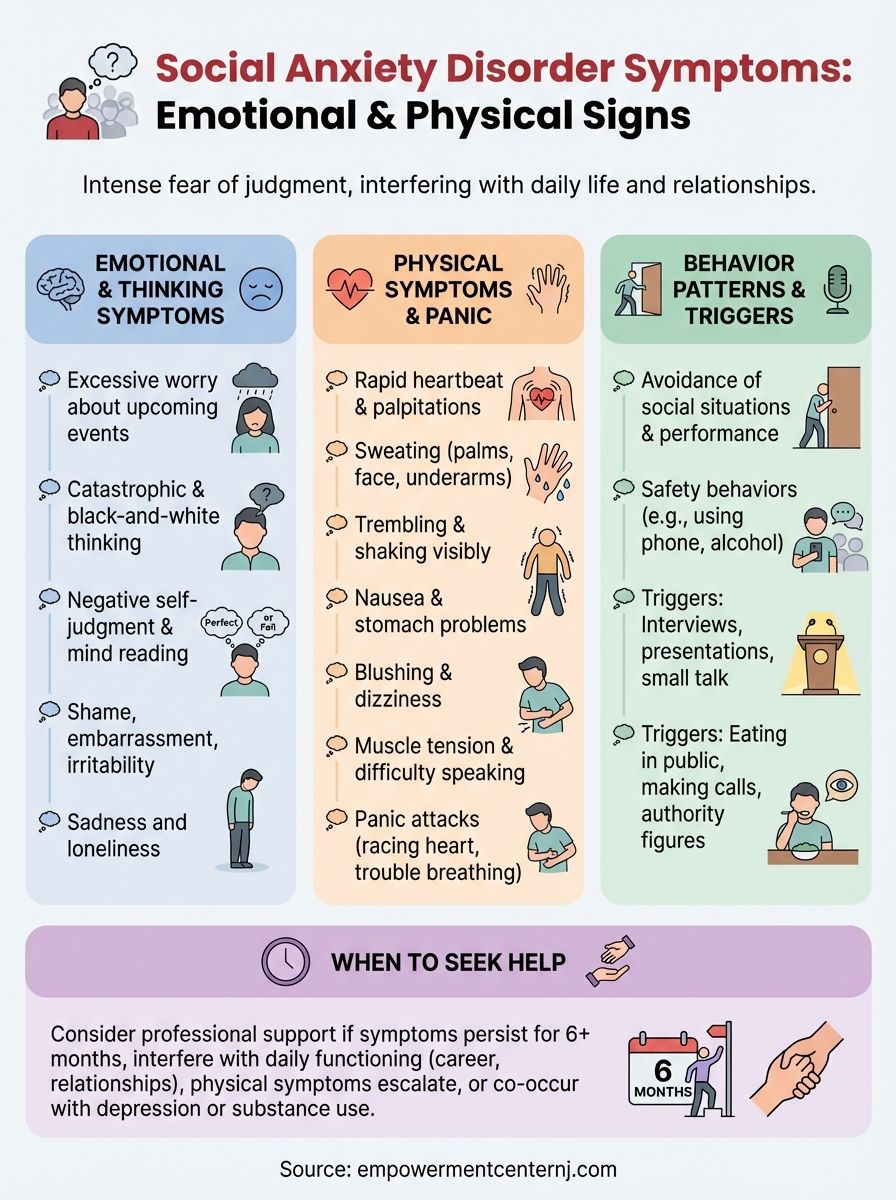
Social anxiety disorder symptoms show up differently for each person, but they share a common thread: intense fear or discomfort in situations where you feel watched, judged, or evaluated. You might experience these symptoms during job interviews, first dates, public speaking events, or even casual conversations with acquaintances. The fear centers on embarrassing yourself or being negatively judged by others, and this worry can start days or weeks before the actual event.
Understanding what these symptoms look like in real life helps you distinguish between occasional nervousness and a pattern that deserves attention. Your body, mind, and actions all respond to perceived social threats, creating a cycle that can feel impossible to break without support.
When symptoms show up in daily situations
You may notice social anxiety disorder symptoms during specific, predictable scenarios. Meeting new people at work triggers sweating and shaking. Eating in front of others makes your throat tighten. Speaking up in meetings leaves you dizzy and nauseous. These reactions happen even when you logically know there's no real danger, but your body responds as if you're facing a genuine threat.
Some people experience symptoms in nearly all social settings, while others struggle only with performance situations like presentations or interviews. You might feel fine with close friends but panic when interacting with authority figures or strangers. The common factor remains: you anticipate judgment and your body reacts accordingly.
"Social anxiety creates a disconnect between what you know is safe and what your body believes is threatening."
The difference between shyness and a disorder
Shyness involves temporary discomfort that fades as you warm up to people or situations. Social anxiety disorder persists and often worsens without intervention. You don't simply feel a bit nervous before giving a presentation; you spend weeks dreading it, lose sleep, and consider calling in sick to avoid the situation entirely. The fear disrupts your daily functioning rather than just causing momentary awkwardness.
Your symptoms also appear disproportionate to the actual risk involved. Ordering food at a restaurant shouldn't trigger panic, but it does. Making eye contact with a coworker shouldn't require mental preparation, but it does. When anxiety consistently prevents you from doing things you need or want to do, you've crossed from typical social discomfort into disorder territory.
How symptoms build and intensify
Social anxiety symptoms rarely appear all at once. They typically start small and gradually expand to include more situations and stronger reactions. You might initially feel anxious only during formal presentations, but over time, that anxiety spreads to team meetings, phone calls, and casual workplace conversations. Each avoided situation reinforces the fear, teaching your brain that these scenarios truly are dangerous.
The intensity also varies based on factors like stress levels, sleep quality, and recent experiences. You might handle a coffee meeting one week but completely fall apart in the same situation the next week. This unpredictability adds another layer of anxiety because you can't reliably predict when symptoms will strike or how severe they'll be.